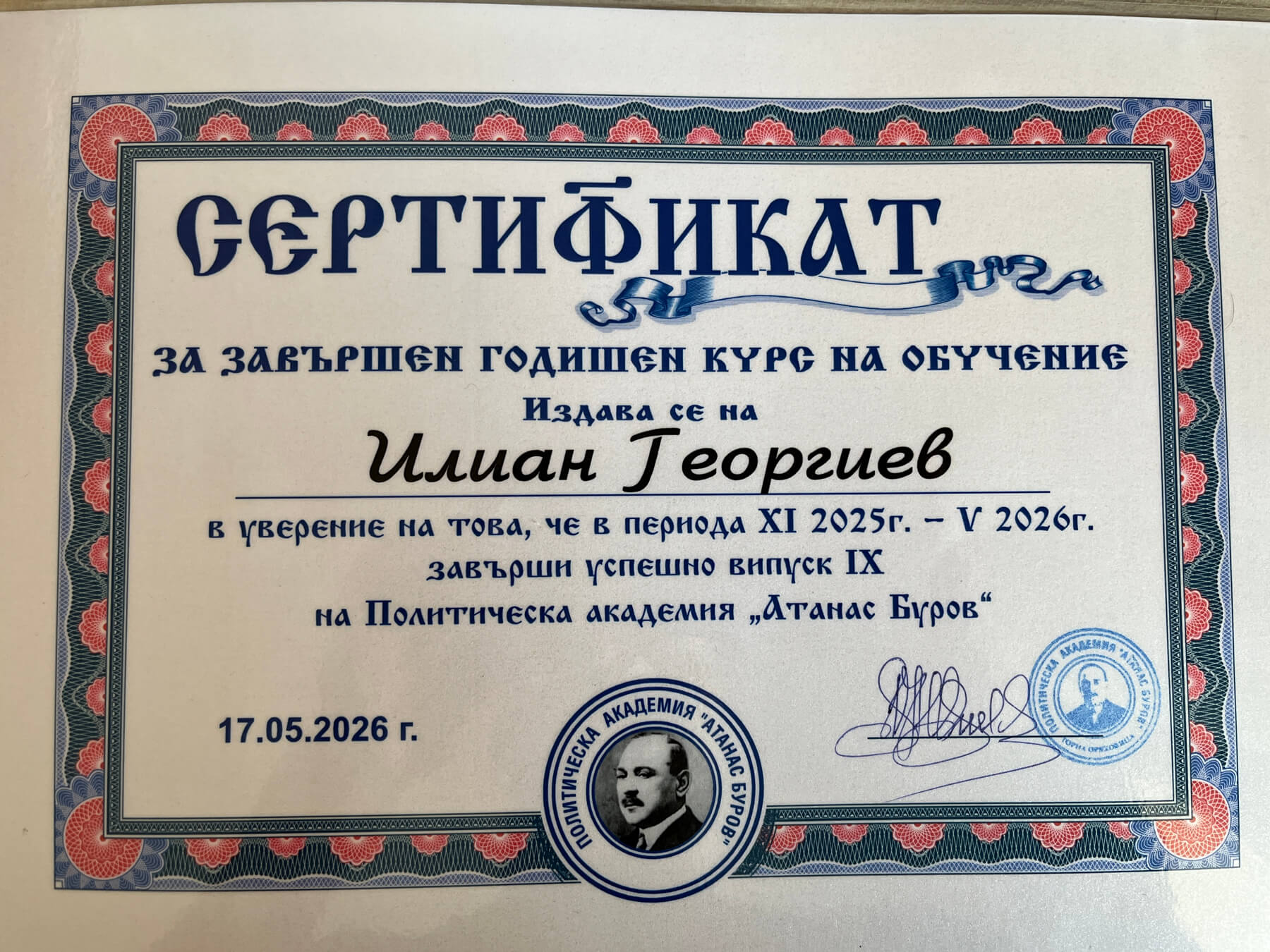
I graduated from the Atanas Burov Academy of Politics
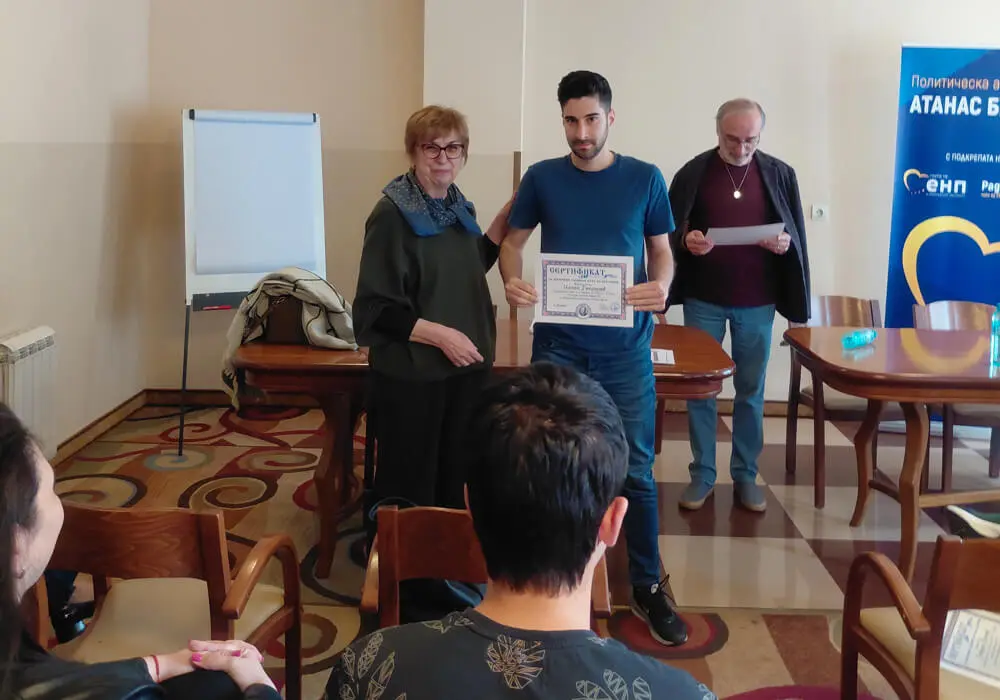
I completed the ninth cohort of the "Atanas Burov" Political Academy - one of those experiences that are difficult to capture in a few words, because they are not merely training, not merely meetings, not merely lectures and seminars. For me, the Academy was a journey. A journey through ideas, conversations, debates, doubts, new friendships, and that special feeling that when awake, active, and thinking people gather in one place, Bulgaria seems more possible, more meaningful, and stronger.
When I applied, I did so with the desire to develop my leadership qualities, to learn more from people with real experience, and to be part of a community that does not view public life as a spectator sport. I believed that politics can and must be practiced with integrity, morality, responsibility, and care for people. At the end of the Academy, I can say that I leave with an even stronger conviction in this.
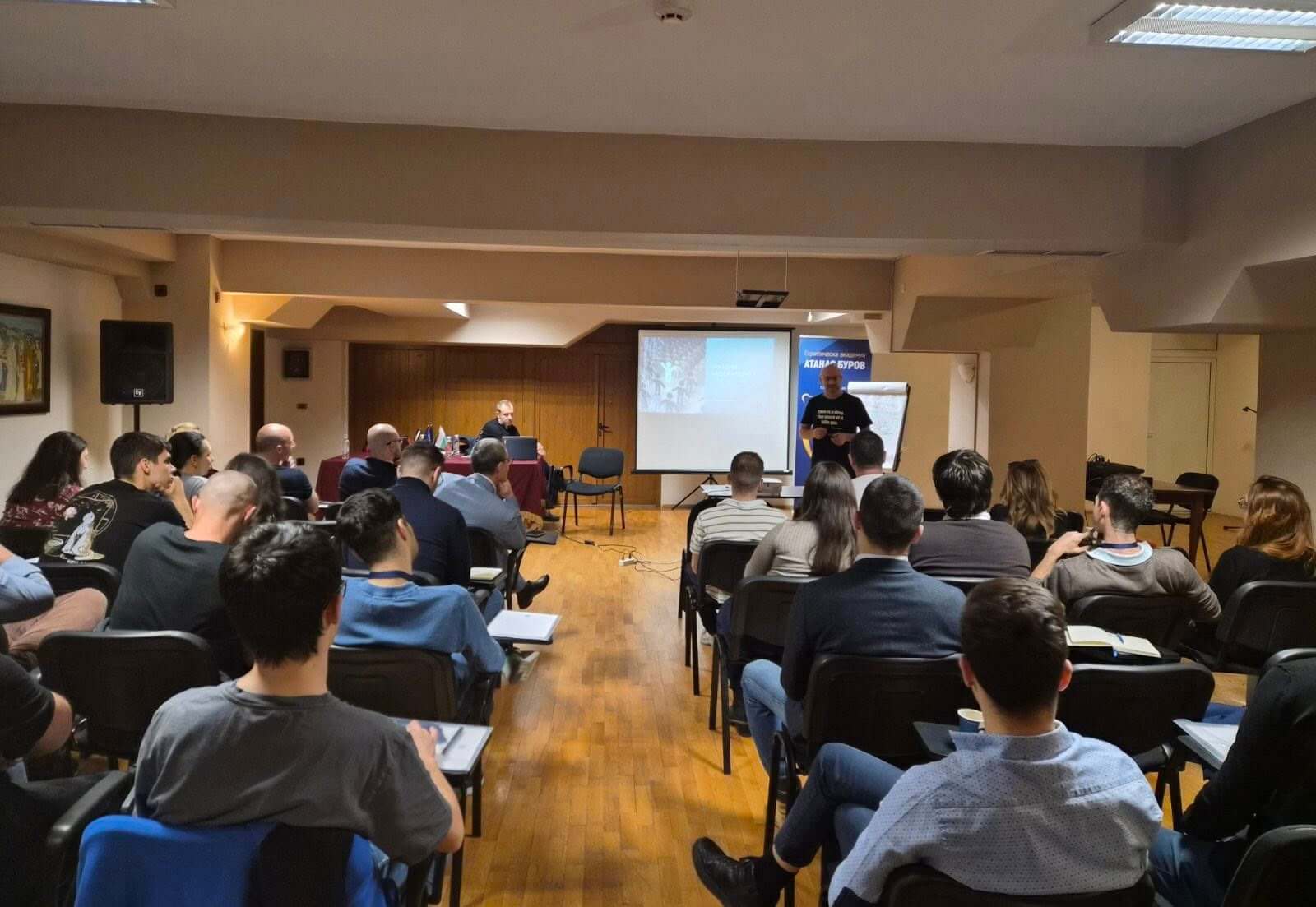
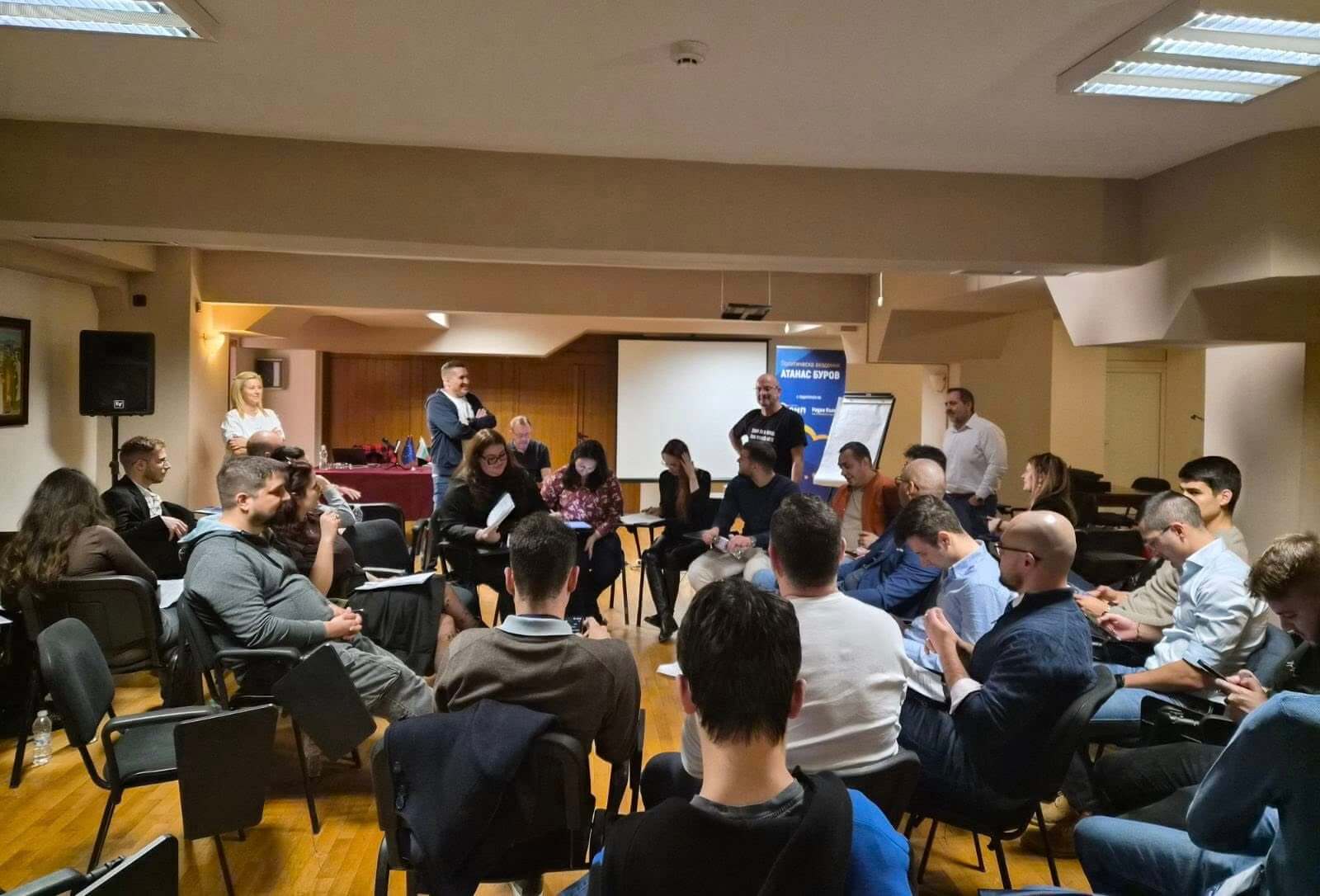
From November 2025 to May 2026, we went through five seminars dedicated to leadership and team-building, strategic analysis, conflict management, negotiation, building a public image, media presence, public communication, and conducting election campaigns. This was not dry theory. It was learning through experience - with role-playing, simulations, group tasks, discussions, feedback, and many situations in which a person sees not only how they think, but also how they act under pressure.
The most valuable thing for me was that the Academy did not speak about politics as a technology for power, but as a responsibility. As an effort to understand people. As the ability to make decisions. As the readiness to bear consequences. As the skill to argue without destroying. As the character to remain faithful to your principles even when it is difficult, inconvenient, or unpopular.
The name of Atanas Burov carries a particular weight. It reminds us of statesmanship, economic foresight, European culture, parliamentarism, and political dignity. That is precisely why it was an honor for me to be part of an Academy bearing this name - not as a formal symbol, but as a living measure of what it means for politics to be service, not an end in itself.
First of all, I want to thank Yordan Baychev (organizer and one of the founders of the "Atanas Burov" Political Academy). Dancho is one of those people who do not simply organize events, but create community. I thank him for his perseverance, personal attitude, clear discipline, human warmth, and the enormous energy with which, year after year, he builds a space for young people who want to think, debate, learn, and be useful.
I thank Radan Kanev (Member of the European Parliament from the EPP Group) for his dedication, presence, and conversations, which turned every topic into a real political and human lesson. His contribution to the Academy is far more than individual lectures - it is a consistent belief that Bulgaria can be a strong, modern, European country without complexes, if there are people ready to work for this with reason, character, and perseverance.
I thank Katina Siegel (office of Radan Kanev, Member of the European Parliament) for the organization, attention to detail, and the sense that behind every meeting, invitation, and coordination there was genuine care for people. Such seemingly "invisible" efforts are in fact what make the whole experience orderly, calm, and meaningful.
I thank Assoc. Prof. Dr. Ivan K. Ivanov (lecturer in political psychology at the University of Veliko Tarnovo "St. Cyril and St. Methodius") for the strong start of the Academy and for the topics of power, leadership, ethics, group dynamics, and the formation of the political personality. One of the most important messages remained from his lectures - that leadership is not a pose, but a function of the group, of change, and of morality.
I thank Mariyana Zaharieva (moderator) for the calm facilitation, for the structure, and for the way she helped the group enter the topics not only intellectually, but also as a community. Good moderation often remains in the background, but it is precisely what gives rhythm, focus, and meaning to the work.
I thank Dr. Boris Gyurov (researcher and lecturer in strategic analysis, negotiations, and conflict management) for the second seminar, which placed us at the heart of political thinking - how to set realistic goals, how to negotiate, how to manage conflicts, and how to think strategically when the stake is not personal comfort, but a public result.
I thank Georgi Georgiev (moderator), Radoslav Ivanov (moderator), and Dimitar Chorbadzhiev (moderator) for their work on one of the most practical and dynamic seminars. It is precisely in such exercises that a person understands that politics is not only about having a position, but about being able to defend it, negotiate, seek agreement, and remain resilient in a conflict environment.
I thank Lyubomir Alamanov (communications expert, founder and managing partner at SiteMedia Consultancy) for the topics of communications, crisis management, and public behavior. From his lectures, a very clear understanding remained that communication is not decoration added to content, but part of responsibility - because the absence of communication often creates crises, while good communication builds trust.
I thank Radoslav Bimbalov (co-founder of The Smarts Group, advertising professional, and writer) for the different perspective on public image, words, suggestion, and the way a person, a cause, or a community is present in people's minds. This was a reminder that in public life words carry weight, and an image cannot be artificially manufactured if there is no substance behind it.
I thank Asen Lazarov (co-founder of "Active Policies") and Ivaylo Madzharov (co-founder of "Active Policies") for the practical perspective on online presence, the digital environment, and new forms of civic participation. Their participation showed that political communication no longer happens only from podiums and television studios, but also on social networks, in short formats, in the language of young people, and in the ability to turn the complex into something understandable.
I thank Kalina Vlaykova (journalist and trainer in public communication) for the practical lessons on behavior in front of the media, on clear messages, and on how a person should speak in order to be understood. I left this seminar with a very specific rule - public speaking is not about saying everything, but about saying the most important thing clearly, honestly, and at the right time.
I thank Lilia Tsacheva (political journalist) for the work on media behavior, the simulations, and the feedback. These exercises showed how different it is to think that you have a position and to actually express it in front of a camera, under pressure, with limited time, and with the need for a clear message.
I thank Ivan Bedrov (journalist and media analyst) for the perspective on the media environment and the way public conversation is changing. The topic of the future of the media was particularly important, because today politics, journalism, social networks, influencers, and artificial intelligence are no longer separate worlds, but parts of one common information environment in which truth must be defended every day.
I thank Katya Paneva (politician and Member of Parliament from "Democratic Bulgaria") for the practical view of the structure and functioning of an election campaign headquarters. This was a valuable lesson about the invisible side of campaigns - the organization, the people, the tasks, the discipline, and the responsibility behind every public action.
I thank Traycho Traykov (economist, former Minister of Economy, Energy and Tourism) for the conversation about the specifics of different types of election campaigns. In politics, there is no universal recipe - local, parliamentary, presidential, and European elections require a different approach, a different scale, and a different sensitivity to people and context.
I thank Prof. Ekaterina Mihaylova (lawyer, lecturer in constitutional law, and former Deputy Speaker of the National Assembly) for the encounter with political experience, institutional memory, and democratic culture. The conversation about the development of the democratic political space in Bulgaria was not merely a lecture, but a lesson in resilience, memory, and responsibility toward the transition, the institutions, and the future.
I thank Prof. Veselin Metodiev (historian, lecturer at New Bulgarian University, former Deputy Prime Minister and Minister of Education and Science) for the lecture on Atanas Burov - the man and the statesman. This was a powerful finale, because it brought the entire meaning of the Academy back to its name: to the idea that politics has value only when it is connected with character, knowledge, national responsibility, and a European horizon.
I also thank the European People's Party and Radan Kanev's team for the support thanks to which this program reaches young and active people from different places in Bulgaria. Such investments in civic and political education are investments in the future of the country.
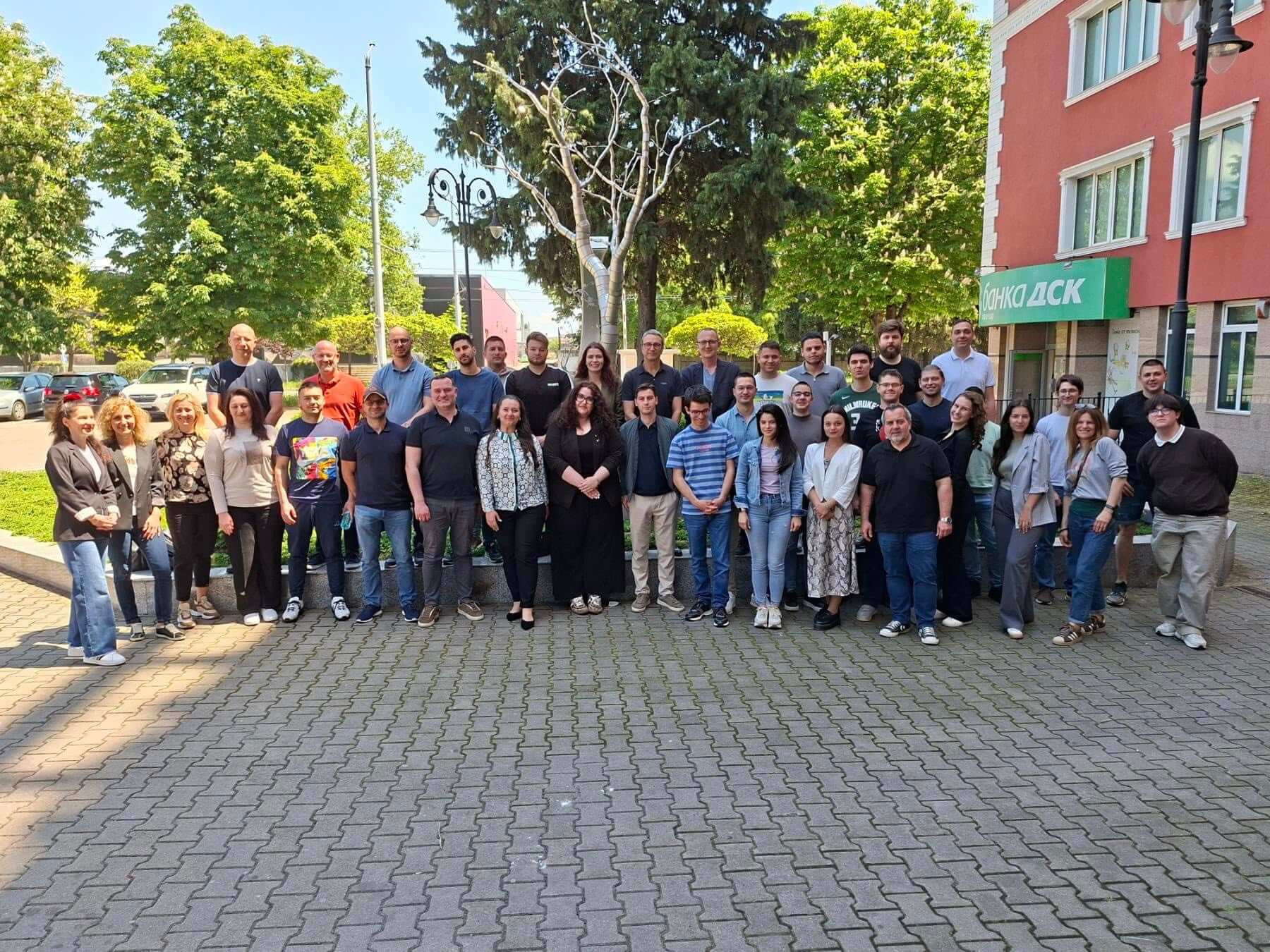
I cannot fail to thank all my colleagues from the ninth cohort as well. For the late-night conversations, the debates, the laughter, the different points of view, the energy, and the feeling that you are not alone in your desire for Bulgaria to be a better place. At the Academy, I met people with experience, people with dreams, people with causes, people with character - and that in itself is of enormous value.
I leave the "Atanas Burov" Political Academy with new knowledge, new friendships, and a much clearer understanding of how difficult, but also how important, public work is. Change does not come from the sidelines. It does not happen by itself. It is made by people who have the courage to participate, to take responsibility, to make mistakes, to learn, and to continue.
For me, this training was an honor, an inspiration, and a reminder that Bulgaria does not need endless complaining, but persistent building. People with ideas. People with principles. People who can work in a team. People who are not afraid of difficult conversations. People who believe that politics can be honest, meaningful, and humane.
I complete the ninth cohort of the "Atanas Burov" Political Academy with gratitude - and with an even stronger conviction that public life has meaning when it is guided by knowledge, character, responsibility, and the belief that Bulgaria can do more.
About the author

Ilian Georgiev was born on February 15, 1998 in Ruse, Bulgaria. He has been involved in web programming since he was 11 years old. He is the winner of the award for high merits and contribution in the field of Information technology. Read more
Previous article
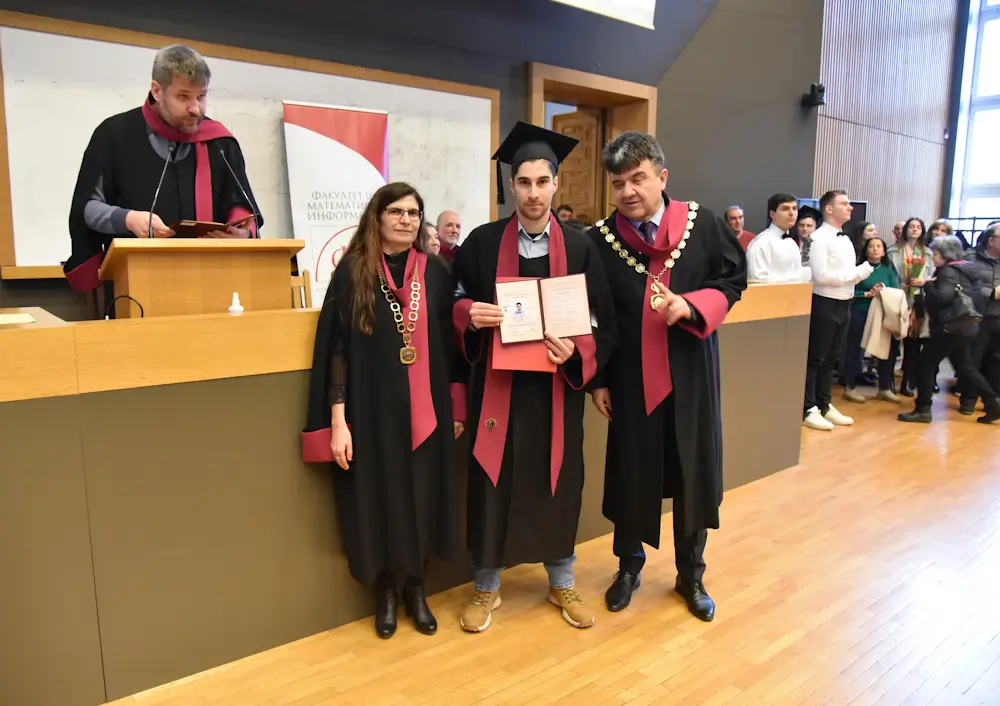
Master of Informatics!
On February 2, 2024, a solemn ceremony was held in the 272nd auditorium in the Rectorate of Sofia University "St. Kliment Ohridski".
Read more